How to maintain preserved moss without watering begins with understanding what it is: natural moss treated to retain its color and soft appearance, not a living plant waiting for a drink. Keep it indoors, away from direct sunlight, damp rooms, and strong airflow. A sunny windowsill can fade green tones; a humid bathroom may encourage unwanted moisture. Dust gently with a soft brush when needed. That’s usually enough.
Preserved moss expert advice should be specific and verifiable. No source articles or expert interview were provided here, so I can’t responsibly attach a quotation to a named specialist. A useful care principle is simple: “Keep it dry, shaded, and undisturbed.” Check the display occasionally. Look for fading, loose pieces, or condensation nearby. Don’t spray it, rinse it, or place it beside a humidifier. Small adjustments matter.
This guide explores the best-preserved moss options for 2026 and the everyday choices that help them stay attractive without watering. Expect practical details, from choosing a low-light wall location to handling dust without flattening delicate textures. Preserved moss is low-maintenance, not indestructible. Even careful displays can fade over time, and product quality varies. That deserves a little honest attention.
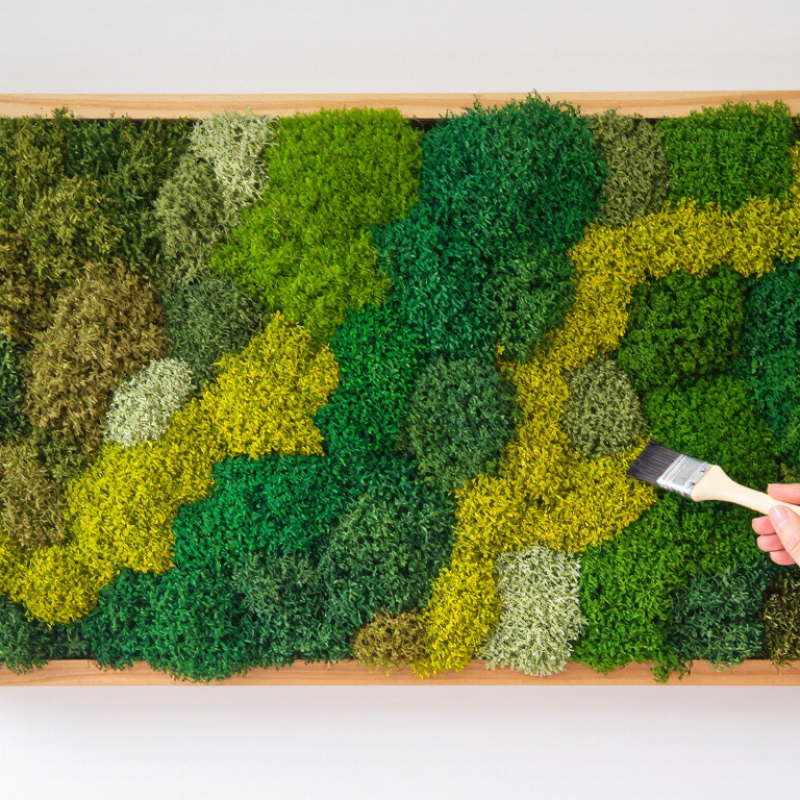
What Preserved Moss Is and Why It Needs No Water
Preserved moss begins as real moss, then undergoes treatment that replaces much of its natural moisture with a preservative, often glycerin. It is no longer growing or carrying out the functions of a living plant. Its soft texture and color remain, but its needs change. The exact treatment can vary.
That distinction is easy to miss. Preserved moss has no active roots to take up water, so watering it will not keep it fresh. In fact, moisture can loosen its texture, fade its color, or encourage mold in a poorly ventilated spot. A few drops may seem harmless, but repeated dampness can cause damage.
Keep it indoors, away from direct sunlight, heaters, and steamy bathrooms. Dust gently with a soft brush or a brief, cool air stream; avoid rubbing, which can pull loose delicate strands. If the moss feels brittle, adding water is not the fix. Check whether it sits near a sunny window or heat source instead. It is tempting to treat it like a houseplant, and that assumption is understandable, but here, less care usually means better preservation.
2026 Best Preserved Moss Care: How to Maintain It Without Water
What Preserved Moss Is and Why It Needs No Water
Preserved moss is real moss treated to retain its appearance without remaining alive. It needs no watering, misting, or fertilizer. Keep it indoors, away from direct sunlight and excess moisture; dust gently when needed.
How to Choose a Suitable Spot for Preserved Moss
Choose a stable indoor wall with indirect light, away from windows, skylights, and hot lamps. Strong sunlight can fade moss pigments and dry its surface. The Canadian Conservation Institute’s guidance on light-sensitive collections uses 50 lux as a benchmark for highly sensitive materials. Preserved moss is not assigned that exact category, but the guidance supports a cautious approach: avoid prolonged direct sun. A little shade helps.
Keep the display away from bathrooms, kitchens, radiators, and air-conditioning vents. Steam and repeated humidity swings can affect its texture, while dry drafts may make it brittle. The U.S. Environmental Protection Agency’s A Brief Guide to Mold, Moisture and Your Home recommends indoor humidity around 30–50%, and below 60% where possible. This is general indoor guidance, not a moss-specific requirement. Check the chosen spot at different times of day; a wall that seems calm at noon may catch late-afternoon sun. I would not rely on appearance alone. Feel for warm air, watch for condensation nearby, and move the display if the color begins to change. Don’t mist it.
How to Protect Moss from Sunlight, Heat, and Humidity
Preserved moss needs protection from direct sunlight, not routine watering. UV and visible light can fade its color and dry exposed edges. The Canadian Conservation Institute’s light-damage guidance uses 50 lux for highly light-sensitive materials and 150 lux for moderately sensitive ones. These are conservation benchmarks, not moss-specific limits, but they show why a bright windowsill is risky. Place the display several feet from a sunny window, or use a shaded wall. Watch for pale patches first.
Heat speeds fading and can make moss brittle. Keep it away from radiators, fireplaces, hot lamps, and strong air-conditioning vents. A cool, steady room is better than repeated temperature swings. Small detail: check the wall behind it, too. Sun-warmed plaster can heat a display even when the room feels comfortable.
Humidity needs balance. The U.S. Environmental Protection Agency advises keeping indoor relative humidity below 60%, ideally between 30% and 50%, to limit moisture problems. That is general indoor guidance, not a moss-care specification. Avoid bathrooms, steamy kitchens, and damp exterior walls; high humidity may soften preserved moss or encourage surface problems. No misting is needed. If the moss feels damp, relocate it and let the room’s air dry it naturally. I would not treat one humidity reading as a guarantee; room corners and window areas can differ.
How to Remove Dust Without Adding Moisture
Preserved moss is usually dyed and treated to hold its color and texture indoors. It does not need watering, and moisture can soften the material or encourage damage. Do not mist it. Keep it away from sinks, humidifiers, and damp cloths, even when dust looks stubborn.
For light dust, use a clean, dry, soft artist’s brush. Sweep gently from the center outward, letting loose particles fall onto a sheet of paper. Go gently. Avoid rubbing, since delicate tips can break or flatten. A soft makeup brush can work, but wash and fully dry it before use; residue from cosmetics may transfer to the moss. Test a small, hidden patch first. I once assumed a brush was too soft to cause harm, but pressure matters more than softness.
For a broad, flat surface, use a vacuum on its lowest setting with a fine mesh securely covering the nozzle. Hold it several centimeters away, and check that the mesh cannot be pulled loose. Stop if strands lift or shift. Dust a little at a time. A dry microfiber cloth may help on the frame, but keep it off the moss itself. Regular gentle dusting is safer than waiting for a thick layer to build up.
How to Spot Damage and Maintain Preserved Moss Safely
Preserved moss should not be watered; moisture can soften its treatment, leave marks, or encourage mold. Look closely. Fading, flattened areas, loose pieces, or unusually brittle tips may signal heat, strong light, or age. A musty smell or fuzzy growth deserves attention, though a change in color alone does not always mean damage.
Inspect the moss in steady, indirect light, and avoid rubbing it to test its condition. Keep it away from sunny windows, radiators, humidifiers, and frequently opened exterior doors. For light dust, use a clean, soft brush with minimal pressure on firmly attached areas. A hand blower on a gentle setting can help with fragile surfaces. Avoid water, cleaning sprays, and household vacuums; even careful cleaning can pull delicate strands loose.
If you notice suspected mold, do not brush or blow it around. Keep the display away from other moss and fabrics, and ask a preservation professional how to handle it. Wear clean gloves when moving a piece, especially if its backing is exposed. Less is safer. I would not try to restore faded moss with dye or oil; the result can look uneven and may damage nearby materials. Stable, dry conditions usually matter more than frequent handling.
FAQS
No. It is no longer growing, and its roots cannot absorb water. Even a few drops can cause trouble.
Moisture may soften its treatment, fade its color, or encourage mold in a poorly ventilated spot. Keep it dry.
Use a clean, dry, soft brush. Sweep gently from the center outward. Go gently.
Only with great care. Use the lowest setting and secure fine mesh over the nozzle. Stop if strands lift or shift.
Choose a dry spot away from sunny windows, radiators, humidifiers, and steamy bathrooms. A little distance matters.
Strong light, heat, or age may be contributing. Check the display’s location before trying to treat it. I once assumed brittle moss needed water; that was the wrong instinct.
Do not brush or blow it around. Separate the display from other moss and fabrics, then ask a preservation professional for advice.
I would avoid it. The finish may look uneven, and nearby materials could be damaged. Sometimes doing less is safer.
Conclusion
Preserved moss is natural moss that has been specially treated to retain its soft texture and appearance, so it does not need watering or sunlight to stay attractive. How to maintain preserved moss without watering starts with choosing a suitable indoor spot: place it away from direct sun, heaters, fireplaces, and areas with frequent temperature or humidity changes. A stable, dry environment helps prevent fading, brittleness, or unwanted moisture-related damage.
To keep the moss looking fresh, remove dust gently with a soft, dry brush or a light pass of cool air, taking care not to press or pull at the surface. Avoid spraying it, wiping it with a damp cloth, or exposing it to steam. Check occasionally for changes in color, texture, or loose sections. If damage appears, handle the area carefully and avoid adding water or applying products that could affect the moss.

 Purely Plants