Top Benefits of Artificial Green Walls for Room Acoustics?

Time:2026-09-29 Author:Madeline
0%

Can artificial green walls help with room acoustics? They can, but the answer depends on how the wall is built and where it is installed. A decorative panel with dense foliage may soften reflections in a lively room. It may reduce some high-frequency echoes, such as sharp voices or clattering dishes. That can make conversation feel more comfortable. It will not block sound passing through a wall, and it cannot replace proper acoustic treatment in a demanding space. The distinction matters.

Artificial greenery often combines leaves with a backing, frame, or acoustic substrate. These materials affect performance more than appearance alone. In a small meeting room, a covered wall behind speakers may help reduce fluttering reflections. In a restaurant, panels near hard surfaces might make the room feel less harsh. Results vary. Room size, ceiling height, furnishings, panel depth, and coverage all play a part. A few thin leaves on a rigid backing may change little.

For a reliable decision, check whether the product has independent acoustic test data, including its sound absorption rating and test method. Ask how the rating relates to the planned installation, since mounting and air gaps can alter results. A supplier’s attractive photographs are not acoustic evidence. Nor is a quieter room automatically proof that one panel caused the change. Compare the space before and after installation, if possible. Artificial green walls can add visual warmth and contribute to acoustic comfort, but expectations should stay realistic. Sometimes the improvement is subtle. That is worth considering before covering an entire wall.
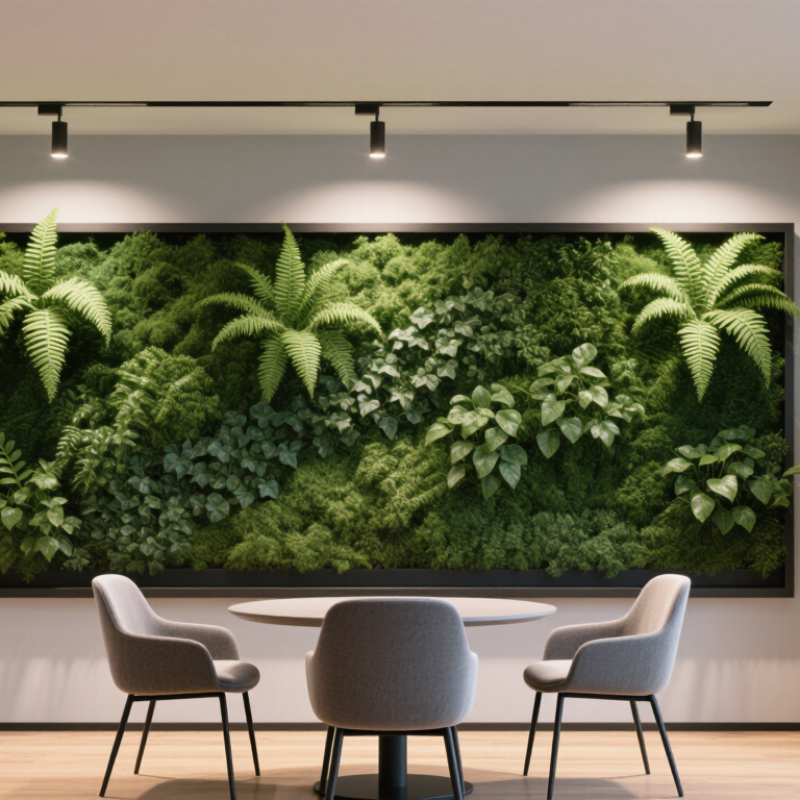
Top Benefits of Artificial Green Walls for Room Acoustics?

How Artificial Green Walls Influence Room Acoustics

How Artificial Green Walls Influence Room Acoustics

Artificial green walls influence room acoustics mainly by scattering sound and, when built with absorptive backing, reducing reflections. Plastic leaves alone are not reliable sound absorbers: hard, smooth surfaces can reflect speech back into a room.

A layered system with porous backing may absorb some mid- and high-frequency sound, while its effect on low-frequency noise is usually limited. The difference matters. A leafy appearance does not prove acoustic performance.

For a useful benchmark, ANSI/ASA S12.60 sets a reverberation-time limit of 0.6 seconds for core learning spaces up to 283 cubic metres. That figure describes a room target, not a guaranteed result from any green wall.

Ask for independent reverberation-room test data, such as testing under ISO 354, and check the tested panel size, backing, and frequency range. In a meeting room, a wall opposite a talker may soften sharp reflections, but placement and coverage matter.

A small decorative strip may change the look more than the sound. Even with test data, real rooms behave differently; furniture, glazing, and ceiling height complicate predictions.

Sound Absorption and Echo Reduction Benefits

Artificial green walls can soften room acoustics when their foliage sits over an absorptive backing. The leaves scatter reflections, while felt, mineral fiber, or recycled polyester captures sound energy. Published testing in Applied Acoustics (Azkorra et al., 2015) found vegetated wall assemblies improved absorption, particularly across speech frequencies between 500 and 2,000 hertz. Results varied by depth, density, air gaps, and mounting method.

That variation matters.

A decorative panel without porous backing may absorb very little sound. Laboratory measurements should follow ISO 354 or ASTM C423, which evaluate absorption coefficients and Noise Reduction Coefficients. Industry tests commonly report NRC values around 0.40 to 0.70 for properly built acoustic wall systems, although artificial foliage alone may perform far below that range. A 0.60 NRC surface absorbs approximately 60 percent of incident sound energy under standardized conditions, not in every real room.

In practice, a wall beside a meeting table can reduce flutter echoes and make speech clearer. It will not stop bass passing through a partition. Room size, ceiling height, window glass, and furniture still influence the result. Installation experience also shows an awkward truth: dense greenery can hide gaps, but it cannot replace correct acoustic coverage. Independent testing remains essential. I would question any supplier promising dramatic echo removal without frequency-specific data, reverberation-time measurements, and a clear backing specification.

Improving Speech Clarity in Indoor Spaces

Top Benefits of Artificial Green Walls for Room Acoustics

Improving Speech Clarity in Indoor Spaces

Artificial green walls can help people understand speech in busy indoor spaces. They soften reflected sound from hard walls, glass, and polished floors. This reduces the sharp echo that often masks consonants. In a meeting room, that difference may make quiet voices easier to follow.

The effect depends on the wall’s construction. Dense foliage alone has limited acoustic value. A layered backing panel, a small air gap, and full surface coverage usually perform better. During room assessments, acoustic professionals often check reverberation time and speech intelligibility rather than relying on appearance. A wall near the speaker can reduce early reflections. A wall behind listeners may control returning sound.

Small details matter.

Placement should match the room’s problems. For example, a green wall beside a reception desk may calm voices without blocking movement. In classrooms, coverage near sidewalls can reduce distracting reflections. However, artificial greenery cannot replace ceiling absorption or thoughtful furniture placement. It also will not remove background noise from ventilation systems.

Results can be uneven. A decorative panel may look substantial but absorb little sound. That is an easy mistake. Measuring the space before and after installation offers more reliable evidence. Some rooms still need additional treatment, especially when several people speak at once. Green walls work best as one part of a balanced acoustic design, not as a magical cure.

Top Benefits of Artificial Green Walls for Room Acoustics

Artificial green walls can help improve speech clarity by adding sound-absorbing surfaces that reduce reflections and reverberation in indoor spaces. The chart compares representative speech-transmission results before and after installation.

Key insight: Higher Speech Transmission Index (STI) values indicate clearer speech. In this representative comparison, adding an artificial green wall increased STI across different speaker–listener distances, with the strongest improvement at longer distances.

Factors That Affect Acoustic Performance

Top Benefits of Artificial Green Walls for Room Acoustics

Artificial green walls can soften echoes while adding visual warmth to offices, studios, and hospitality spaces. Their acoustic value depends less on the leaves and more on the backing system. Dense felt, mineral fiber, or recycled polyester layers absorb mid and high frequencies. A decorative plastic panel alone may absorb very little sound. Published laboratory data for comparable acoustic wall systems often reports Noise Reduction Coefficients between 0.40 and 0.70, depending on thickness and installation.

Room size also matters. Large, hard surfaces create stronger reflections. Glass, concrete, and polished flooring can overpower a small green wall. Coverage is critical. A wall covering 20 percent of the room cannot perform like one covering 60 percent. An air gap behind the panel may improve low-frequency absorption.

However, the result changes with cavity depth, panel density, and mounting method. ASTM C423 and ISO 354 provide recognized methods for measuring these effects. The 2018 WHO Environmental Noise Guidelines recommend indoor classroom levels below 35 dB(A), showing why background control deserves careful planning.

Decorative claims should not replace test evidence. I have seen attractive installations underperform because the backing was too thin.

Tips: Request third-party test results, not only product brochures. Check NRC values, frequency bands, wall coverage, and mounting details. Compare the tested assembly with the planned room. Also inspect gaps around panels. Small gaps can create unwanted sound paths. Performance may vary.

Choosing Artificial Green Walls for Different Rooms

Artificial green walls can soften room acoustics, but the right choice depends on the room’s purpose. Dense foliage scatters reflected sound, while a felt, foam, or mineral backing absorbs more noise. Check the product’s acoustic data, fire rating, cleaning needs, and installation method before buying. Decorative leaves alone may look impressive but offer limited sound control. It is not magic.

In a living room, choose a medium-density wall with varied leaf sizes behind a sofa or television. This placement can reduce sharp reflections without making the space feel enclosed. Bedrooms usually need quieter, calmer surfaces. Select soft colors, compact foliage, and a thin sound-absorbing backing near hard walls. For a home office, use a taller panel behind the desk or opposite a window. It can reduce distracting echoes during online meetings. Keep the microphone away from dense leaves, because nearby surfaces may create uneven reflections.

Restaurants and reception areas often need stronger treatment. Use fuller panels on large blank walls, especially near conversations and tiled floors. Maintenance matters there. Dusty foliage can gradually weaken the visual effect and may affect air quality for sensitive guests. Artificial green walls work best with rugs, curtains, ceiling treatments, or conventional acoustic panels. Measure the room before installation, then reassess after placement. A phone app can suggest changes, but it cannot replace professional acoustic testing. Some rooms may need more than greenery.

FAQS

How do artificial green walls affect room acoustics?

They scatter reflected sound and may reduce echoes. Plastic leaves alone usually absorb very little sound.

Can artificial greenery make speech clearer?

Yes, especially near meeting tables or conversation areas. Dense leaves can soften sharp reflections between 500 and 2,000 hertz.

What backing improves sound absorption?

Porous materials help, including felt, mineral fiber, recycled polyester, or acoustic foam. The leaves are only one layer.

Do artificial green walls block low-frequency noise?

Usually not. Bass can still pass through walls and partitions. More treatment may be needed.

Does a decorative green panel guarantee acoustic improvement?

No. A small strip may change the appearance more than the sound. That is easy to overlook.

What acoustic information should buyers request?

Ask for independent laboratory results, tested panel size, backing details, and frequency ranges. Check absorption data, not just photographs.

Where should an artificial green wall be installed?

Place it beside a meeting table, opposite a talker, or near a hard window. Placement matters greatly.

How can different rooms use artificial green walls?

A living room may use medium-density foliage behind a sofa. A home office may need a taller panel behind the desk.

Can artificial green walls replace rugs, curtains, or ceiling treatments?

Usually no. They work better with other soft surfaces. Some rooms need more than greenery.

Conclusion

Can artificial green walls help with room acoustics? Yes, artificial green walls can contribute to a more comfortable acoustic environment by adding textured, layered surfaces that help scatter and absorb some sound energy. Their foliage can reduce harsh reflections, soften echoes, and make indoor spaces feel less noisy, especially when installed on large, bare walls. While they do not replace professional acoustic panels, they can support better sound control while also adding visual warmth.

Their acoustic performance depends on factors such as foliage density, wall coverage, backing materials, panel depth, room size, and the position of other hard surfaces. In offices, meeting rooms, restaurants, studios, and reception areas, the right design can improve speech clarity by limiting reverberation and reducing background distractions. For the best results, choose dense, layered greenery for larger rooms and combine it with other sound-absorbing materials where stronger acoustic treatment is needed.

Madeline

Madeline

Madeline is a dedicated marketing professional with a wealth of expertise in our company's core offerings. With a keen understanding of the industry, she brings a unique perspective to her role, consistently delivering high-quality content that highlights the superior aspects of our products. As......