A vertical green wall can transform a plain surface into a vivid, breathing feature. Yet beauty should never replace structural planning. Before choosing among the seven best vertical green walls, readers need one practical answer: How much weight can a vertical green wall hold?
The answer depends on its frame, anchors, irrigation, plant maturity, and supporting wall. A lightweight felt system may weigh 5 to 15 pounds per square foot when saturated. Modular planter systems can exceed 25 pounds per square foot. Waterlogged soil adds surprising pressure. So does a mature fern after heavy watering.
Patrick Blanc, a pioneer of living-wall design, describes the central idea this way: “The wall is a support; the plants create the living architecture.” His principle matters here. The visible plants are only part of the load. Hidden trays, growing media, reservoirs, pipes, and metal brackets also affect safety.
A professional installer should inspect masonry, timber, or drywall before installation. They should also calculate the fully saturated weight, not the dry estimate. That detail is often missed.
This guide compares seven popular vertical green wall options. It considers construction, drainage, maintenance, and realistic load limits. The figures are useful starting points, not universal guarantees. Building conditions vary. Sometimes, the safest answer is less planting.
A small wall can still become heavy. Imagine six square feet holding nearly 150 pounds after irrigation. That is not decorative weight anymore. It is a structural decision. Consult a qualified engineer when the wall, balcony, or fixing points show uncertainty.
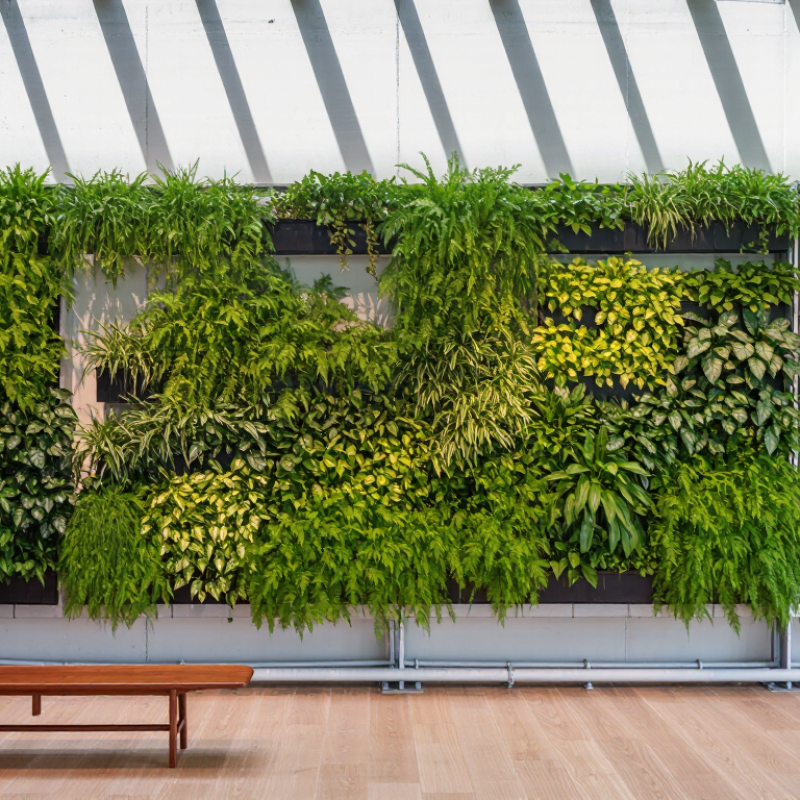
Vertical green walls are planted systems fixed to an indoor or outdoor surface. They are not simply pots attached to a wall. A typical system uses a frame, waterproof backing, growing media, irrigation lines, and drainage channels. Plants grow in modular pockets or panels. Water moves through the root zone, then returns to a tank or exits through controlled drainage.
The wall’s weight changes significantly after watering. Dry media can feel light, but saturated panels become much heavier. A professional assessment should include plants, containers, framing, irrigation water, and maintenance loads. Structural engineers often calculate the fully saturated condition, not the dry showroom condition. There is no universal weight limit. That assumption is imperfect. Existing walls, anchors, and masonry can behave differently.
Vertical greenery may support broader building goals. The United Nations Environment Programme’s 2023 Global Status Report states that buildings used about 34% of global energy and produced 37% of energy- and process-related carbon emissions in 2022. A green wall cannot solve those impacts alone. However, it may shade selected surfaces, soften hard interiors, and improve visual comfort. Research on indoor plants also remains more limited in real buildings than in controlled laboratories. A realistic inspection checks moisture sensors, blocked drains, root health, and nearby electrical equipment.
Water first. Beauty later.
7 Best Vertical Green Walls: How Much Weight Can They Hold?
Seven types suit different buildings and planting goals. Modular panel walls usually weigh 20–60 kg/m² when saturated. They work well in offices and hotel lobbies. Felt-pocket walls weigh about 15–35 kg/m². Their slim profile suits narrow corridors, but leaking irrigation can damage finishes. Trellis systems are lighter, often 10–25 kg/m² before mature plant growth. They suit balconies and outdoor facades. Hydroponic walls commonly reach 25–50 kg/m². They support herbs and leafy plants, yet require pumps, filters, and dependable drainage.
Preserved moss walls are much lighter, usually 5–12 kg/m². They provide texture rather than active air purification. Freestanding green partitions typically weigh 30–80 kg/m², depending on their reservoir and frame. They are useful in rented spaces because they avoid major wall attachment. Facade-integrated systems can exceed 50–150 kg/m². Their anchors, wind loads, and irrigation pipes require professional structural review. These are planning ranges, not guaranteed capacities.
The United Nations Environment Programme reported that buildings consumed about 34% of global energy in 2022. The U.S. Environmental Protection Agency also links vegetation with cooler urban surfaces. A living wall may support comfort, but it is not a substitute for insulation. In practice, saturated soil causes the biggest surprise. I once underestimated maintenance access. That was a mistake. A structural engineer should check the wall, fixings, water, and full plant maturity before installation.
| No. | Vertical Green Wall Type | Basic Design | Typical Saturated Weight* | Approximate Weight per m² | Best Uses | Advantages | Main Limitations |
|---|---|---|---|---|---|---|---|
| 1 | Green Facade with Climbing Plants | Plants grow from ground-level soil or raised planters and climb a trellis, cable grid, or mesh attached to the wall. | 5–15 lb/ft² | 25–75 kg/m² | Exterior walls, fences, screens, courtyards, and large landscape projects. | Usually the lightest planted option; good airflow; can provide shade and habitat; maintenance is concentrated at the ground level. | Plant growth is slower to establish; mature vines may create substantial wind and maintenance loads; the support structure must be securely anchored. |
| 2 | Modular Living Wall Panels | Interlocking plastic, metal, or composite modules hold plants and a growing medium, often with integrated irrigation. | 15–35 lb/ft² | 75–170 kg/m² | Residential courtyards, offices, hospitality areas, retail interiors, and outdoor feature walls. | Flexible layout; individual modules can be replaced; supports a broad range of ornamental plants. | Requires a strong structural backing, regular irrigation, drainage, and access for plant replacement and cleaning. |
| 3 | Pocket or Felt-Based Living Wall | Water-retaining felt or fabric pockets hold plants, with nutrient solution distributed through a drip or recirculating system. | 10–25 lb/ft² | 50–120 kg/m² | Interior green walls, atriums, reception areas, restaurants, and protected balconies. | Thin profile; efficient use of vertical space; suitable for dense planting patterns and decorative displays. | Fabric can remain damp; leaks may damage the wall; requires careful water-quality control, pruning, and replacement of plants. |
| 4 | Hydroponic Vertical Garden | Plants grow in inert supports such as channels, towers, or panels while roots receive a circulating nutrient solution instead of soil. | 8–20 lb/ft² | 40–100 kg/m² | Indoor herbs, leafy greens, educational installations, kitchens, and controlled-environment growing areas. | Efficient water delivery; no conventional soil; clean appearance; productive for edible crops when lighting and climate are suitable. | Needs pumps, tanks, electricity, filtration, and monitoring; a pump failure can quickly stress plants; nutrient systems require regular servicing. |
| 5 | Substrate-Based Green Wall Panels | Rigid trays or panels contain a deeper mineral or organic growing medium that supports plants more like a conventional garden bed. | 25–50 lb/ft² | 120–245 kg/m² | Permanent exterior installations, terraces, public spaces, and walls requiring larger or longer-lived plants. | Greater root volume; broader plant selection; often more tolerant of plant size and seasonal changes than shallow systems. | One of the heaviest options; needs substantial structural support, reliable drainage, waterproofing, and inspection of anchors. |
| 6 | Vertical Planter or Container Wall | Individual pots, troughs, or planter boxes are mounted on a frame, rack, or freestanding structure. | 20–60 lb/ft² | 100–295 kg/m² | Balconies, patios, kitchens, small gardens, apartment courtyards, and movable screening systems. | Simple to understand and reconfigure; plants can be changed individually; suitable for herbs, flowers, and compact vegetables. | Weight varies greatly with container size and wet soil; can create concentrated point loads; frequent watering may cause runoff and staining. |
| 7 | Preserved Moss or Lichen Wall | Preserved, non-living moss or lichen is bonded to a backing panel and arranged as a decorative texture or pattern. | 2–8 lb/ft² | 10–40 kg/m² | Dry interior spaces, offices, meeting rooms, retail displays, acoustic feature walls, and low-maintenance décor. | Very lightweight; no irrigation, soil, or grow lights; low routine maintenance and strong visual impact. | Not a living plant system; should be kept away from prolonged moisture, direct sunlight, and high-humidity conditions. |
| Important: The weight ranges are practical planning estimates for a fully watered or saturated installation, including plants, containers or panels, growing media, and retained water. They are not certified structural capacities. Actual loads vary with system design, plant maturity, moisture content, irrigation equipment, wind exposure, and mounting details. A qualified structural professional should verify the wall, anchors, and support frame before installation. | |||||||
Different green wall systems carry very different weights. The plants are only part of the load. Moisture, growing media, trays, irrigation lines, and the supporting frame also matter.
Modular panel systems often weigh 15 to 30 pounds per square foot when fully saturated. Felt-pocket systems may weigh about 8 to 20 pounds per square foot. Soil-based living walls can exceed 30 pounds per square foot. Trellis systems are usually lighter, often 3 to 10 pounds per square foot, but mature vines can add surprising pressure. These figures are practical ranges, not guarantees. Site conditions change everything. A wall exposed to rain may become much heavier overnight. The anchor type, wall material, and panel spacing must be checked by a qualified professional.
Tips: Measure the system after full watering, not when dry. Include temporary maintenance loads. Ask for tested weight data and installation details. Never rely on plant weight alone. In site assessments, I have seen small errors in moisture estimates create large safety concerns. I would also question any calculation using an average plant weight. Some roots spread unevenly, and blocked drainage can increase the load quickly. A conservative design leaves room for growth, repairs, and human access. That extra margin may seem excessive, but it is easier than reinforcing a finished wall.
7 Best Vertical Green Walls: How Much Weight Can They Hold?
The seven common vertical green wall formats include felt pockets, modular trays, planter boxes, hydroponic panels, trellis systems, moss panels, and climbing-plant frames. Their load capacity varies widely. A lightweight felt system may carry around 15–25 kg per square metre when saturated, while deep modular planters can exceed 40 kg per square metre. These figures are practical estimates, not approval values. The FLL Guidelines for Green Roofs and Green Roof Sites emphasize saturated weight, drainage, and long-term moisture exposure during design. A dry wall can become surprisingly heavy after irrigation.
Wall construction matters more than plant choice. Concrete, masonry, and reinforced steel usually provide stronger anchoring options than plasterboard or hollow partitions. The frame, brackets, water tank, pipes, growing medium, mature plants, and retained water all add weight. ASCE 7-22 requires engineers to consider wind and seismic forces, but it does not provide a universal rating for every living wall. Site inspection remains essential. Anchors can fail before the plants become the problem.
In practice, installers should calculate the fully saturated weight, then include maintenance loads and safety margins. A 10-square-metre wall weighing 30 kg per square metre already adds about 300 kilograms. That is easy to underestimate. I would not trust a dry product sample alone. Poor drainage, rusting fixings, and uneven irrigation can change the load over time. An independent structural engineer should verify the wall, especially in older buildings. Fancy planting cannot repair weak support.
Typical saturated installed load ranges for common vertical green wall systems. Values include plants, growing media, retained water, containers and support components.
Water saturation is often the largest variable because wet growing media and retained irrigation water can add substantial mass. Substrate depth, plant maturity, drainage performance, panel or frame strength, fixing points, wall construction and local safety requirements also affect the final load. These ranges are general planning estimates, not structural approval limits. A qualified structural engineer should verify the supporting wall, anchors and safety factors before installation.
Choosing a safe vertical green wall starts with its saturated weight, not its showroom appearance. Industry design data commonly places living-wall loads between 40 and 80 kilograms per square metre when fully watered. This includes panels, growing media, plants, irrigation, and trapped water. A 6-square-metre wall may therefore add 240 to 480 kilograms. Green Roofs for Healthy Cities’ industry guidance recommends checking the complete installed load, while FLL planning guidance stresses project-specific structural verification.
Ask a structural engineer to inspect the wall, anchors, and substrate. Concrete, masonry, and framed walls need different fasteners. Check pull-out strength, not only vertical capacity. Keep irrigation lines accessible, and install a secondary waterproof layer behind the system. Water can find tiny gaps. It usually does. The awkward mistake is trusting a general floor-load figure, such as 2.0 kN/m² from EN 1991-1-1. That value does not automatically approve a vertical installation. Moisture, wind, vibration, and uneven loading still matter.
Tips: Weigh one fully saturated module before installation. Multiply that result by the planned area, then add a safety margin recommended by your engineer. Leave inspection access around valves and drains. Test the irrigation system for several days. I would also photograph every anchor before covering it; later repairs become surprisingly difficult. Choose plants suited to the wall’s light and humidity, because stressed roots can create maintenance problems and conceal leaks.
A fully saturated system usually weighs 20–60 kg per square metre. Moisture adds weight quickly. Include panels, growing media, plants, pipes, and brackets. Dry samples are misleading.
Yes, their slim profile suits narrow corridors and limited spaces. They usually weigh about 15–35 kg per square metre when saturated. Leaking irrigation may stain nearby finishes.
Preserved moss panels are usually the lightest, weighing around 5–12 kg per square metre. They add texture rather than active air purification. Trellis systems are also light before plants mature.
Yes, mature vines can add unexpected pressure and weight. A trellis may weigh 10–25 kg per square metre before mature growth. Wind, rain, and plant spread also matter.
Pumps, filters, water reservoirs, pipes, and retained water increase the total load. Hydroponic systems commonly weigh 25–50 kg per square metre. Dependable drainage is essential.
No. Concrete and masonry usually offer stronger anchoring options than plasterboard or hollow partitions. The wall, fixings, water, and mature plants need professional review. Anchors can fail first.
Measure the system after full watering, not when dry. Include maintenance workers, tools, reservoirs, frames, and future plant growth. A 10-square-metre wall at 30 kg per square metre adds 300 kilograms.
No, they may support outdoor comfort but cannot replace proper insulation. Vegetation can cool nearby surfaces. The effect depends on sunlight, wind, water, and building design.
Blocked drainage can retain water and increase the load quickly. Uneven irrigation may also create concentrated pressure. I once underestimated maintenance access. That was a mistake.
It may reduce wall attachment, which helps in rented spaces. However, the reservoir and frame can weigh 30–80 kg per square metre. The floor must still support the full load.
Vertical green walls transform bare surfaces into living displays by supporting plants in containers, modular panels, felt pockets, hydroponic frames, or climbing structures. This guide compares seven common green wall types by design, maintenance needs, water management, and suitable uses, from lightweight decorative systems to larger installations designed for commercial or outdoor spaces. Each system works differently, so its stability, drainage, and structural requirements should be considered before installation.
How much weight can a vertical green wall hold depends on its frame, mounting method, growing medium, plant size, water content, and the strength of the supporting wall. The guide explains how these factors can change the total load and why a system that appears lightweight may become much heavier after watering. It also offers practical advice for selecting an appropriate design, checking the wall structure, distributing weight evenly, allowing access for maintenance, and installing the system safely and securely.

Purely Plants