How to mix real and artificial plants in a garden requires more than placing plastic greenery beside living foliage. It demands balance, restraint, and careful observation. Real plants provide movement, fragrance, seasonal change, and habitat for insects. Artificial plants offer consistent color in shaded corners, windy balconies, and spaces where watering is difficult. Used thoughtfully, they can support a garden’s structure without pretending to replace nature.
Landscape designer Piet Oudolf once said, “Planting is an art, and plants are the medium.” His idea applies here. Treat artificial plants as visual tools, not the garden’s main character. Place them behind real plants, near walls, or inside difficult containers. Choose outdoor-rated materials with UV protection and realistic stems. Avoid shiny leaves. They usually look false.
Start with living plants near paths and seating areas. Their texture rewards close attention. Add artificial ferns or grasses farther away, where distance softens small imperfections. Repeat similar colors, but vary leaf shapes. Keep the arrangement slightly uneven. Perfect symmetry can feel artificial.
Maintenance still matters. Dust synthetic leaves every few weeks, secure pots before storms, and inspect fading after strong sunlight. Real plants need suitable soil, drainage, and seasonal care. Do not hide unhealthy plants behind artificial ones. That shortcut often fails.
A mixed garden may look convincing today and awkward next year. Reconsider it as real plants grow. The best design remains flexible, honest, and connected to its setting.
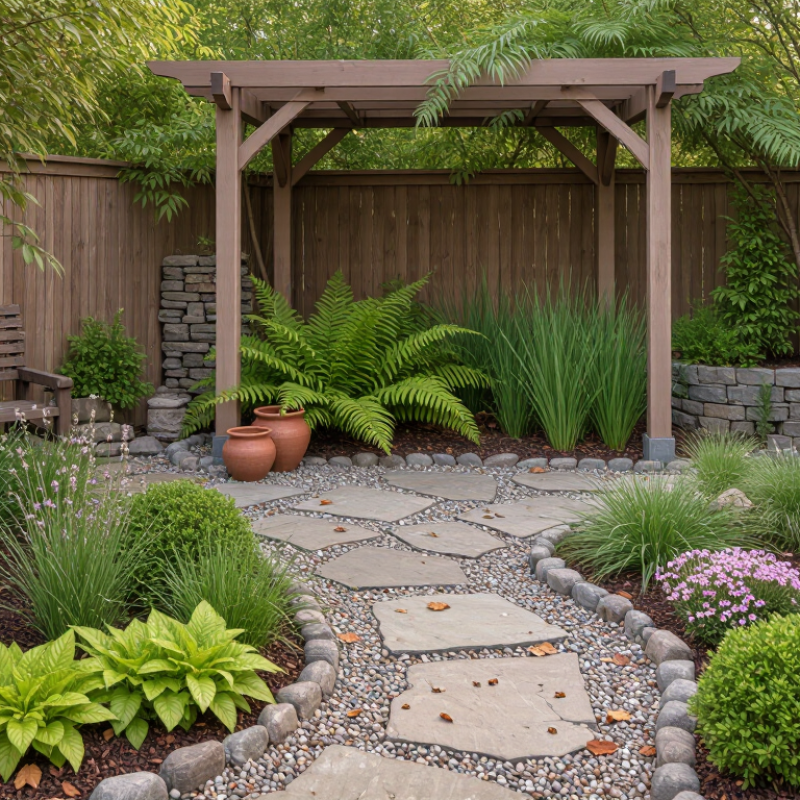
Before mixing real and artificial plants, study the garden’s light, climate, and existing growth. Track sunlight at 9 a.m., noon, and 4 p.m. for three clear days. Six hours of direct light suits many sun-loving plants, while deep shade needs different choices. A wall can also create a hotter, drier pocket than nearby soil.
Match living plants with local conditions, not just appearance. The 2023 USDA Plant Hardiness Zone Map identifies average annual minimum temperatures, helping gardeners select plants likely to survive winter. NOAA’s 1991–2020 Climate Normals reveal local rainfall, heat, and frost patterns. Artificial foliage may fill a dark corner, but intense ultraviolet exposure can fade it quickly. Moist coastal air may also encourage algae on its surface. I once placed artificial leaves beside thirsty ferns; the contrast looked careless after one dry week.
Tips: Group real plants where light and irrigation are reliable. Use artificial plants in awkward corners, but keep them away from constant rain and harsh afternoon sun. Check the garden’s existing species for clues. If moss covers the soil, the area is probably damp and shaded. If leaves show crisp edges, reduce reflected heat before adding more plants. Leave space between materials for airflow, even when the arrangement feels slightly unfinished. Gardening advice from university extension services commonly recommends observing site conditions before choosing plants, yet observation is easy to rush. Take photographs, record watering, and revise the layout after one month.
| Garden Assessment | Typical Conditions | Recommended Real Plants | Best Use of Artificial Plants | Mixing Guidance | Maintenance Considerations |
|---|---|---|---|---|---|
| Bright, direct sun | More than 6 hours of direct sunlight daily; exposed to heat and strong glare. | Sun-tolerant plants such as lavender, rosemary, thyme, ornamental grasses, and many succulents. | Use sparingly in covered containers or areas where irrigation is difficult. Select products rated for outdoor ultraviolet exposure. | Place living plants in the brightest positions and use artificial foliage as background filler in shaded corners or decorative containers. | Real plants may need frequent watering during hot weather. Artificial foliage still requires dust removal and inspection for fading or cracking. |
| Partial shade | Approximately 3–6 hours of direct sun or bright filtered light, often beneath open trees or beside structures. | Ferns, coral bells, hostas, impatiens, and other plants suited to filtered light. | Use artificial plants to maintain fullness in spots where seasonal growth is slow or uneven. | Repeat similar leaf shapes and container colors so artificial pieces support, rather than compete with, living plants. | Check soil moisture before watering. Remove fallen leaves from artificial foliage so the display remains visually consistent. |
| Deep shade | Less than 3 hours of direct sun or predominantly low, indirect light. | Shade-tolerant options such as cast-iron plant, some ferns, moss, and certain woodland perennials. | Useful for adding height, color, or dense foliage where many living plants would become sparse or weak. | Keep artificial plants toward the darkest background areas and place the healthiest real plants where available light is greatest. | Avoid overwatering because shaded soil often dries slowly. Clean artificial leaves regularly, especially under trees. |
| Hot, dry climate | High temperatures, low humidity, rapid evaporation, and possible water restrictions. | Drought-tolerant plants such as agave, yucca, lavender, rosemary, and established native species. | Use in sheltered seating areas or decorative pots where irrigation is unavailable, while avoiding heat-trapping locations. | Make drought-tolerant real plants the dominant feature and use artificial accents only to fill persistent gaps. | Group real plants with similar water needs and apply mulch. Monitor artificial materials for brittleness, discoloration, and heat damage. |
| Cool, wet climate | Frequent rainfall, high humidity, damp soil, and limited drying between watering events. | Moisture-tolerant plants such as ferns, sedges, astilbe, and suitable native perennials. | Place in covered areas, sheltered containers, or locations where natural foliage would be vulnerable to persistent wet conditions. | Provide good spacing and airflow so artificial foliage does not create a dense, damp pocket around living plants. | Use containers with drainage holes and check for root rot. Clean artificial leaves and allow them to dry after heavy rain. |
| Wind-exposed site | Regular strong winds, open boundaries, rooftops, balconies, or coastal exposure. | Wind-tolerant, flexible plants such as ornamental grasses, low shrubs, and well-established native species. | Use only in stable, weighted containers or protected areas; lightweight artificial stems can become loose or blow away. | Keep taller artificial pieces close to walls or screens and use living plants as lower, more naturally anchored layers. | Secure containers, inspect supports, and remove damaged leaves or stems. Prune real plants to reduce wind resistance when appropriate. |
| Existing mature planting | Established trees, shrubs, ground cover, and a recognizable seasonal planting pattern. | Choose compatible species with similar light, soil, moisture, and mature-size requirements. | Use as discreet fillers behind mature plants or in containers that can be moved without disturbing roots. | Match the color, scale, and leaf texture of the existing planting. Avoid placing artificial pieces where they are easily touched or closely viewed. | Do not block sunlight, airflow, or access to living plants. Reassess the arrangement as mature plants grow. |
| Sparse or newly planted garden | Young plants have not reached their mature size, leaving visible gaps between planting groups. | Fast-establishing annuals, perennials, shrubs, or ground covers suited to the site’s conditions. | Use temporary container displays rather than permanently inserting artificial foliage into planting beds. | Keep artificial elements easy to remove so they can be reduced as real plants fill the space. | Track plant growth, watering, and survival through the first growing season before adding more permanent features. |
| Pollinator-focused garden | The garden is intended to provide nectar, pollen, shelter, or host plants for insects and other wildlife. | Flowering plants selected for the local climate and for staggered blooming across the growing season. | Use only as a visual accent away from the main habitat area; artificial plants provide no nectar, pollen, or shelter. | Keep real flowering plants visually dominant and avoid artificial foliage that could conceal flowers or nesting spaces. | Avoid pesticides where possible and maintain clean water sources. Inspect artificial decorations for trapped insects or debris. |
Match their light, texture, and weather needs with nearby living plants. A glossy fern suits shade better than a sunlit herb bed.
Consider cold tolerance, rainfall, wind, and heat. A dry, windy garden needs stronger materials than a cool courtyard.
Choose UV-resistant fibers, stable pigments, and weighted pots. Test one stem first because colors may fade unexpectedly.
Keep them slightly behind real foliage. Similar textures help, while repeated leaf patterns become less obvious.
Use ground anchors, concealed wire, or heavy containers. Tall stems need deeper support, especially in exposed areas.
Remove weeds and stones, then loosen compacted soil. Set each plant at its original soil level.
Keep them away from fresh growth, irrigation lines, and drainage paths. Leave space for pruning and seasonal expansion.
Wipe it with a soft, damp cloth every seven to ten days. Use a small paintbrush on textured leaves.
Rinse them monthly and let them dry fully. Trapped moisture can cause odors and stains.
Recheck it every few months and after harsh weather. Rotate faded stems, replace cracked pots, and prune crowded living plants.
How to mix real and artificial plants in a garden begins with understanding the space. Assess the garden’s sunlight, temperature, humidity, soil, wind exposure, and existing plant life before making any choices. Select artificial plants with colors, shapes, and textures that suit these natural conditions, while choosing real plants that can thrive in the available environment. This creates a more convincing and harmonious display.
Plan the layout carefully by combining both plant types in balanced groups rather than placing them randomly. Use real plants as focal points and artificial plants to fill difficult areas or maintain year-round structure. Install and secure every plant in its intended location so that roots, containers, and decorations remain stable. Finally, water, prune, fertilize, clean, and inspect the display regularly. Refresh artificial foliage when it becomes dusty or faded, and replace or rearrange plants as the garden changes. With thoughtful planning and ongoing care, a mixed garden can look natural, attractive, and easy to maintain.

 Purely Plants